
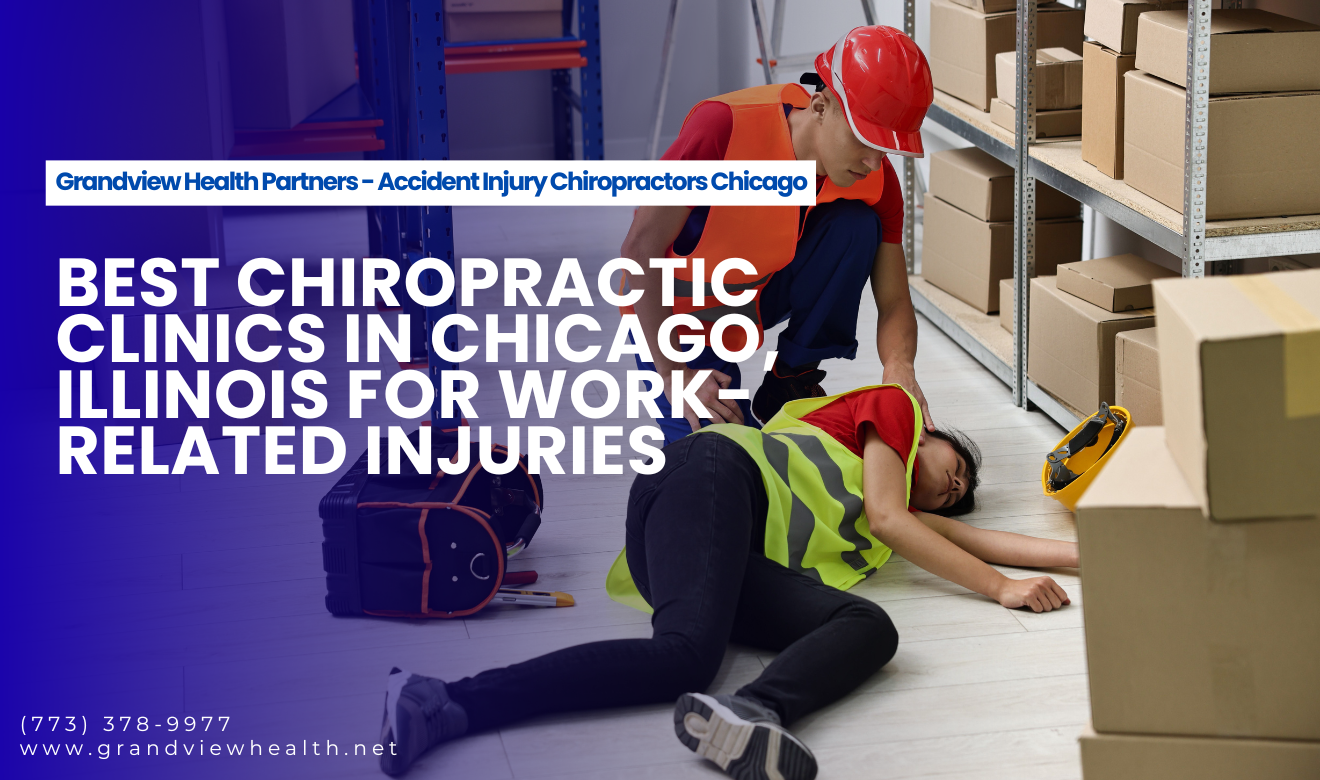
Executive Summary
Choosing the best chiropractic clinic in Chicago for injured at work means prioritizing providers who combine hands-on care with thorough evaluation, clear documentation, and job-specific return-to-work planning. The right clinic focuses on measurable functional recovery—not just short-term pain relief—so you can return safely with appropriate work restrictions.
Key Takeaways
- Work-Injury Expertise Matters: Look for clinics that routinely treat job-site injuries (lifting strains, falls, repetitive stress) and understand workplace demands.
- Thorough, Documented Evaluations: Quality first visits include injury mechanism review, orthopedic/neurological testing, range-of-motion measures, and red-flag screening that supports medically credible reporting.
- Function-Based Treatment Plans: Effective care blends adjustments or mobilization with soft-tissue therapy and rehab exercises tied to real job tasks like lifting, reaching, and standing tolerance.
- Clear Work Restrictions and Progress Tracking: Strong clinics translate findings into practical restrictions (lifting limits, bending/overhead limits) and update them as objective measures improve.
- Early, Structured Care Supports Safer Return: Prompt treatment and baseline measurements reduce compensation patterns, limit flare-ups, and create a clear pathway back to full duty when appropriate.
If you’re looking for the best chiropractic clinics in Chicago, Illinois for work-related injuries, start by choosing a chiropractic clinic in Chicago for injured at work that routinely handles job-site pain, paperwork, and recovery plans. The right clinic will focus on reducing pain, restoring movement, and helping you safely return to work.
For example, if you strained your lower back lifting boxes, a good chiropractor may use gentle spinal adjustments, soft-tissue work, and guided stretching to improve mobility over a few visits. If you have neck and shoulder pain after a warehouse or construction accident, they may add posture training, ergonomic tips, and targeted rehab exercises you can do at home and on breaks.
You’ll also want a clinic that can clearly document your injury, track progress, and explain work restrictions, like limiting lifting or avoiding overhead tasks. That way, your care stays organized while you focus on getting better.
What to look for in a chiropractic clinic in Chicago for injured at work
A reliable chiropractic clinic in Chicago for injured at work should do more than “crack backs.” Work injuries are often tied to job demands, time pressure, and documentation requirements. The best clinics combine hands-on care with clear reporting and practical return-to-work planning.
Here are the key signs you’re in the right place:
- Work-injury experience: The clinic regularly treats lifting injuries, slips/falls, repetitive strain, and equipment-related trauma.
- Thorough evaluation: A detailed history, orthopedic/neurological screens, range-of-motion measures, and functional testing when appropriate.
- Clear documentation: Progress notes that track pain, function, and objective findings—helpful when work restrictions or a personal injury claim overlaps with medical care.
- Comfort with work restrictions: Practical limitations (like reduced lifting, limited bending, no overhead work) that match your job tasks.
- Integrated rehab mindset: Adjustments plus soft-tissue work and exercise—not just passive care.
- Communication: They explain what they found, what they’re doing, and what improvement should look like week to week.
If you want a chiropractic clinic in Chicago for injured at work that truly helps you return safely, prioritize clinics that can describe your injury in functional terms (what you can/can’t do) and then prove progress with measurable outcomes.
How work-related injuries are evaluated in chiropractic care
Most people searching for a chiropractic clinic in Chicago for injured at work want to know what the first visit looks like and whether it will “count” medically for a workplace injury. A good evaluation is systematic, reproducible, and easy to document.
Typical first-visit steps
- Mechanism of injury: What happened (lift, twist, fall, impact), when it happened, and what changed afterward.
- Symptom mapping: Location, intensity, radiation (for example, back pain into the leg), numbness/tingling, weakness, headaches.
- Red-flag screening: Signs that require urgent referral (progressive weakness, loss of bowel/bladder control, fracture concern, fever with spinal pain).
- Orthopedic + neurological tests: Reflexes, sensation, strength, nerve tension tests, joint provocation tests.
- Range-of-motion + function: How far you can bend/turn, and what movements reproduce symptoms.
- Care plan: Frequency, expected milestones, and at-home steps.
A well-run chiropractic clinic in Chicago for injured at work will also connect the evaluation to job tasks (standing tolerance, lifting capacity, pushing/pulling, climbing ladders, driving time, tool use).
Why early care matters after an on-the-job injury
Many workers try to “push through,” especially when pain starts mild. But early, structured care can prevent small problems from becoming persistent limitations.
One reason early reporting and treatment is emphasized is the scale of the problem: the U.S. Bureau of Labor Statistics (BLS) reports that employers recorded 2.6 million nonfatal workplace injuries and illnesses in 2023, and cases involving days away from work remain a major category in physically demanding jobs.
Choosing a chiropractic clinic in Chicago for injured at work early can help by:
- Reducing protective muscle spasm that limits motion and disrupts sleep
- Restoring safer movement patterns before you compensate and overload other joints
- Establishing baseline measures (range of motion, strength, functional tolerance) to track real improvement
- Clarifying work restrictions to reduce re-injury risk
In practical terms: earlier care often means less “guessing” at work and fewer flare-ups from trying to do too much too soon.
What injuries a chiropractic clinic in Chicago for injured at work commonly treats
A strong chiropractic clinic in Chicago for injured at work typically sees a predictable set of job-related conditions—especially in warehousing, construction, healthcare, manufacturing, hospitality, and delivery work.
Common work injuries seen in chiropractic offices
- Low back strains/sprains from lifting, twisting, or prolonged bending
- Neck and upper back pain from falls, impacts, poor workstation setup, or driving
- Shoulder, arm, and elbow pain from overhead work, pulling, vibrating tools, or repetitive handling
- Repetitive strain injuries from scanning, packing, typing, or assembly work
- Sciatica-like symptoms when low back issues irritate nerve tissue
- Hip, knee, foot and ankle pain from long hours standing, climbing, carrying, or uneven surfaces
Good clinics triage appropriately. If symptoms suggest fracture, serious neurological compromise, or a condition outside chiropractic scope, a reputable chiropractic clinic in Chicago for injured at work will coordinate referral rather than forcing a one-size plan.
How treatment plans support safe return to work
For most job injuries, the goal isn’t just “less pain.” It’s function: lifting, reaching, walking, driving, tolerating a full shift, and getting through repetitive tasks without flare-ups.
What a return-to-work plan often includes
- Pain control phase: reduce inflammation and muscle guarding; improve basic mobility
- Movement restoration: normalize joint mechanics and soft-tissue mobility
- Stability + endurance: build tolerance for the positions your job requires
- Task-specific progression: simulate or scale your work tasks (lift mechanics, carry tolerance, overhead endurance)
- Graduated work restrictions: restrictions that adjust as function improves
A capable chiropractic clinic in Chicago for injured at work will explain what “better” means in objective terms, such as improved range-of-motion, longer standing tolerance, fewer radiating symptoms, better grip endurance, or the ability to lift/carry within safe limits.
What therapies you may receive (and how they fit together)
Work injuries usually involve a mix of joint irritation, muscle guarding, and movement changes. That’s why the best results often come from combining techniques.
Depending on your exam, a chiropractic clinic in Chicago for injured at work may include:
- Spinal or extremity adjustments: to improve joint motion and reduce pain sensitivity
- Joint mobilization: lower-force techniques for stiff or sensitive areas
- Soft-tissue methods: to calm tight muscles and improve tissue glide
- Rehab exercise: stretching and strengthening designed for your job demands
- Modalities: heat/ice, electrical stimulation, ultrasound, or traction when appropriate
If your injury is related to overuse or awkward posture, adding targeted mobility work matters. For example, guided Stretching can be used to improve hip mobility and reduce load on the low back during lifting tasks.
How documentation works for workplace injuries
People often choose a chiropractic clinic in Chicago for injured at work because they need care that aligns with workplace reporting and claim processes. While requirements vary, quality documentation tends to be consistent.
What good clinical documentation usually covers
- Diagnosis and clinical rationale (what was found on exam)
- Baseline functional limits (what tasks increase symptoms)
- Objective measures such as range-of-motion, orthopedic test findings, strength grades
- Plan of care with frequency and goals
- Progress updates tied to function, not just pain scores
- Work restrictions stated clearly (weights, frequency, postures, overhead limits, ladder use)
A dependable chiropractic clinic in Chicago for injured at work should also be comfortable coordinating with other providers if your case needs imaging, medication management, or specialist evaluation.
Cost: What to expect when you’re injured at work in Chicago
Cost is one of the biggest concerns when searching for a chiropractic clinic in Chicago for injured at work. Pricing varies widely based on complexity, how much rehab is included, and what your claim covers.
Instead of quoting a number that may not apply to your situation, focus on asking these cost-clarifying questions:
- Is my care billed through workers’ compensation, private insurance, or self-pay?
- What services are included in each visit (adjustments, manual therapy, exercise therapy, modalities)?
- How is medical necessity documented over time?
- Are there separate charges for re-exams, reports, or functional testing?
Tip: A transparent chiropractic clinic in Chicago for injured at work can explain the care plan in plain language and outline how progress will be measured—so you can decide if the plan is reasonable before committing to weeks of visits.
How long recovery may take (realistic timelines)
Recovery time depends on severity, your job demands, prior injury history, sleep, stress, and how quickly you can follow work restrictions. A skilled chiropractic clinic in Chicago for injured at work will avoid guarantees and instead give milestones tied to function.
| Injury pattern | What improvement may look like | Common factors that slow progress |
|---|---|---|
| Acute low back strain from lifting | Less spasm, easier bending, improved sit/stand tolerance, safer lifting mechanics | Continuing heavy lifting, poor sleep, repeated flare-ups, skipping restrictions |
| Neck/upper back pain after fall or impact | Better rotation, fewer headaches, improved driving tolerance, less shoulder tension | High stress, prolonged looking down, long commutes, limited home exercise |
| Repetitive strain in forearm/wrist/shoulder | Improved grip endurance, less tingling, better reach tolerance, fewer night symptoms | No ergonomic changes, high repetition, limited rest breaks |
| Sciatica-like symptoms | Reduced radiating pain, improved walking tolerance, better bending without leg symptoms | Smoking, deconditioning, persistent heavy labor, untreated contributing hip stiffness |
A trustworthy chiropractic clinic in Chicago for injured at work will re-evaluate progress and adjust the plan if you stall—rather than repeating the same visit indefinitely.
Case examples: What good work-injury care looks like in real life
Below are realistic examples of how a chiropractic clinic in Chicago for injured at work might manage common scenarios. These are illustrative patterns, not guarantees.
Example 1: Warehouse low-back strain
- Week 1: exam + gentle adjustments/mobilization, soft-tissue care, basic home mobility; temporary restrictions (reduced lifting, limited bending)
- Weeks 2–3: add progressive core/hip stability and hip-hinge retraining; gradually increase lift tolerance
- Week 4+: work-simulated lifting/carrying progressions and prevention plan for future shifts
Example 2: Construction shoulder/neck pain after an incident
- Early phase: assess neck/shoulder mechanics and rule out red flags; reduce pain and spasm
- Rehab phase: scapular control, thoracic mobility, posture coaching, and graded overhead tolerance
- Return-to-work planning: clearly written restrictions (avoid sustained overhead tasks; limit load and frequency)
In both examples, the difference-maker is structure: objective findings, measurable goals, and job-specific progression—exactly what you should expect from a chiropractic clinic in Chicago for injured at work.
Where chiropractic care fits with other providers
Work injuries aren’t always “chiropractic-only.” A high-quality chiropractic clinic in Chicago for injured at work understands when collaboration is appropriate.
You may need coordinated care if you have:
- Persistent numbness/weakness or worsening neurological symptoms
- Suspected fracture or significant trauma
- Complex pain requiring medication management or injections
- Need for imaging based on exam findings and clinical guidelines
If you want more background on common injury patterns and recovery strategies, this guide can help: addressing common workplace injuries in Chicago.
What to ask before choosing a chiropractic clinic in Chicago for injured at work
Use these questions to quickly screen for competence, transparency, and work-injury experience:
- How do you measure functional improvement (not just pain)?
- What work restrictions do you commonly write for my type of job?
- Do you provide re-exams and progress reports at set intervals?
- What home program will I be expected to do between visits?
- How do you decide when I’m ready to return to full duty?
If the answers are vague, that’s a sign the clinic may not be the best chiropractic clinic in Chicago for injured at work for a structured, documented recovery.
Back to Work, Better Than Before
The best results come from choosing a chiropractic clinic in Chicago for injured at work that treats your pain, restores function, and documents progress clearly—so your recovery makes sense medically and practically. Look for evidence-based evaluation, measurable goals, job-specific rehab, and a plan that helps you return safely rather than rushing you back too soon.
From an authority standpoint, chiropractic physicians are doctoral-level clinicians trained in musculoskeletal assessment, orthopedic and neurological testing, and conservative care strategies including spinal and extremity manipulation, mobilization, and rehabilitative exercise. When your provider combines those skills with strong work-injury documentation and clear restrictions, a chiropractic clinic in Chicago for injured at work can be a highly effective part of getting you back to your job with more confidence and less risk of re-injury.
Frequently Asked Questions
Get Back to Work Without Guesswork
If you need a chiropractic clinic in Chicago for injured at work that takes pain relief, paperwork, and return-to-work planning seriously, Grandview Health Partners – Accident Injury Chiropractors Chicago can help. You’ll get a thorough evaluation, clear documentation, and a practical care plan built around your job demands—so you can recover faster, move better, and return to work with confidence.


