
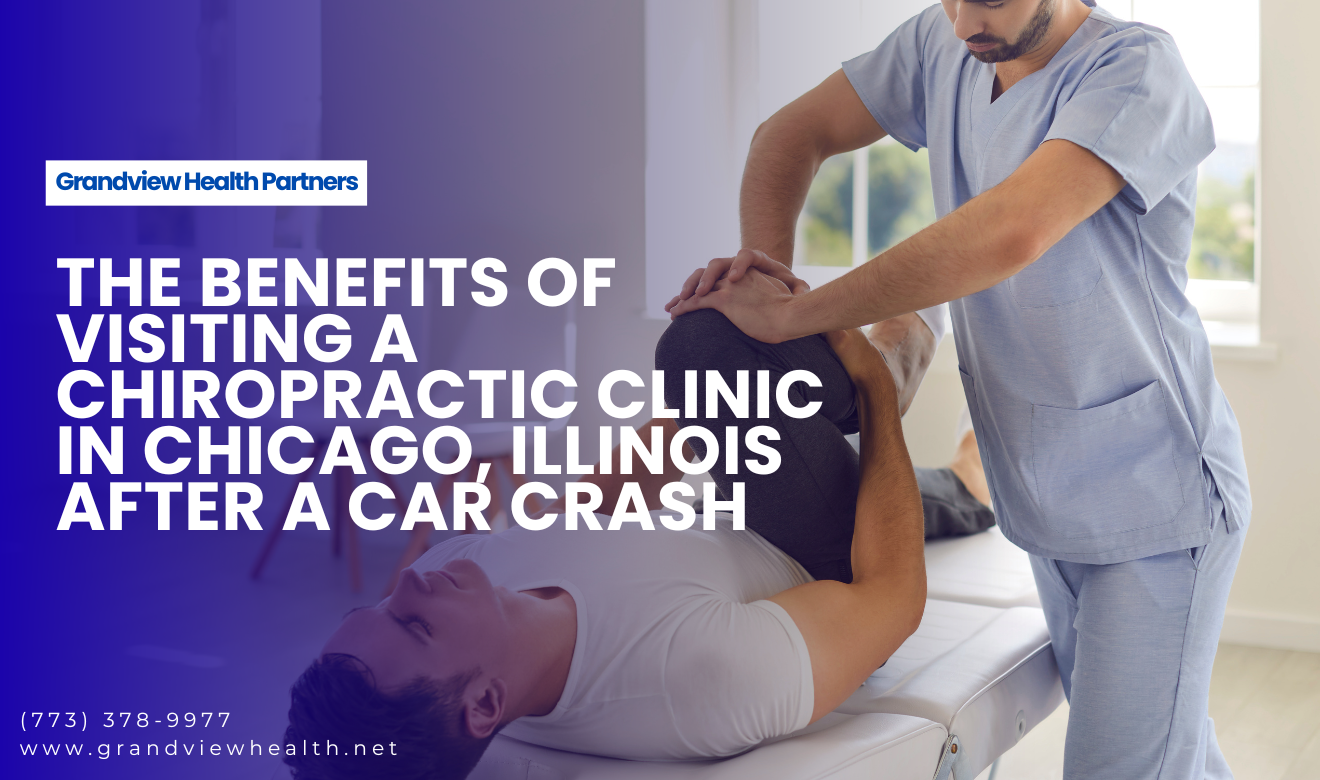
Visiting a chiropractic clinic in Chicago for neck pain from a crash can help you address pain early, restore movement, and document your symptoms while you recover. Even a low-speed collision can leave you with stiffness, headaches, or sharp pain when you turn your head. You might notice it the next morning when you can’t look over your shoulder to change lanes, or when sitting at your desk makes your neck and upper back tighten. A chiropractor can evaluate your range of motion, pinpoint tender areas, and provide hands-on care and rehab exercises to reduce tension and improve function. If your neck pain is making it hard to sleep, drive, or focus at work, getting checked sooner can make the recovery process smoother.
Why neck pain can show up hours (or days) after a crash
One of the biggest surprises after a collision is that symptoms don’t always hit right away. Adrenaline, stress, and “I feel okay” thinking can mask injury until your body settles down.
In a chiropractic clinic in Chicago for neck pain from a crash, providers often see delayed-onset symptoms because the neck absorbs rapid forces even in minor collisions.
Common post-crash neck symptoms
- Stiffness and reduced ability to turn your head
- Headaches that start at the base of the skull
- Sharp pain when looking up or over your shoulder
- Muscle spasms in the neck/upper back
- Tingling or radiating discomfort into the shoulder/arm
- Pain that increases after sitting at a desk or driving
What’s happening in the body
Neck pain after a crash is often linked to strain/sprain patterns, joint irritation, and protective muscle guarding. Whiplash-type mechanisms can overload muscles, ligaments, and facet joints. According to the personal injury definition and context used in medicine and law, documenting what you experience matters—especially when symptoms evolve over time.
When you should get checked right away
While many cases improve with conservative care, certain signs require urgent medical evaluation before chiropractic treatment. A chiropractic clinic in Chicago for neck pain from a crash can help guide next steps, but emergency care comes first if red flags are present.
Red flags that warrant ER/urgent care
- Loss of consciousness, confusion, or worsening dizziness
- Severe headache unlike your usual
- New weakness, numbness, or coordination problems
- Neck pain with fever or unexplained weight loss
- Severe pain with suspected fracture (especially after high-speed impact)
- Changes in vision, speech, or facial drooping
What to expect at a chiropractic evaluation after a car accident
Visiting a chiropractic clinic in Chicago for neck pain from a crash usually starts with a structured exam aimed at safety, clarity, and measurable progress. The goal is to understand what tissues are irritated, what movements are limited, and what activities are triggering symptoms.
Typical first-visit steps
- History: crash details, symptom timeline, prior neck injuries, current work demands
- Range-of-motion testing: turning, bending, looking up/down
- Orthopedic and neurologic checks: reflexes, sensation, strength, nerve tension tests
- Palpation: identifying tender joints, tight bands of muscle, trigger points
- Care planning: treatment frequency, home exercises, activity modifications
Will imaging be needed?
Not every case needs X-rays or advanced imaging. Many patients can be safely managed based on clinical findings. If your symptoms, mechanism of injury, or exam suggests a more serious condition, your provider may recommend imaging or referral. A chiropractic clinic in Chicago for neck pain from a crash should prioritize appropriate triage and documentation.
How chiropractic care helps neck pain from a crash
Care is usually focused on reducing pain, restoring motion, and building tolerance for daily activities like driving, working, and sleeping. A chiropractic clinic in Chicago for neck pain from a crash may combine hands-on care with rehab to address both mobility and stability.
Common treatment components
- Gentle joint work: to improve motion and reduce joint irritation
- Soft-tissue therapy: to calm protective muscle spasm and improve circulation
- Rehab exercise: deep neck flexor activation, scapular stability, postural endurance
- Activity guidance: how to sit, sleep, and drive with less strain
Depending on your exam, your provider may also recommend Chiropractic Adjustments as part of a personalized plan to restore joint mechanics and reduce guarded movement patterns.
Timeline: how long does neck pain last after a collision?
Recovery time varies. Some people feel significantly better in a few weeks, while others need a longer plan—especially if pain was ignored early, sleep is disrupted, or symptoms involve headaches and radiating discomfort. A chiropractic clinic in Chicago for neck pain from a crash can help by tracking objective changes (range of motion, pain scores, functional tolerance) to prevent “guesswork” recovery.
Common recovery influences
- Impact severity and head position at the time of collision
- Prior neck injuries or degenerative changes
- How quickly care begins
- Work demands (desk work, driving, lifting)
- Consistency with home exercises
- Stress and sleep quality
Featured-snippet friendly: quick guide to self-care between visits
If you’re waiting for an appointment or managing symptoms between sessions, these steps are commonly recommended (as long as there are no red flags and you’ve been medically cleared).
Simple at-home steps that often help
- Use brief heat/ice cycles: 10–15 minutes based on what feels better
- Take micro-breaks: every 30–45 minutes at a desk or in the car
- Try gentle range-of-motion: slow turns and nods within a comfortable limit
- Support sleep posture: keep neck neutral; avoid stomach sleeping if it worsens pain
- Don’t “stretch aggressively” into sharp pain: aim for mild tension only
Many patients who visit a chiropractic clinic in Chicago for neck pain from a crash feel better when they combine in-office treatment with consistent, low-intensity home care.
How neck pain from a crash can affect work and daily function
Even if the pain seems “localized,” neck injury often changes how you move throughout the day. People compensate by shrugging, stiffening the upper back, or avoiding head turns—leading to fatigue and headaches.
Common functional challenges
- Driving: difficulty checking blind spots and reversing
- Desk work: increased neck/shoulder tension from prolonged sitting
- Sleep: waking up stiff, frequent position changes at night
- Exercise: discomfort with running, lifting, or overhead activity
If your crash-related symptoms also overlap with workplace strain, you may find it helpful to read addressing common workplace injuries in Chicago to understand how posture, ergonomics, and repetitive stress can amplify neck and upper-back issues.
Documentation matters: why your symptoms should be recorded early
When you visit a chiropractic clinic in Chicago for neck pain from a crash, your clinical records can serve an important role in tracking recovery—especially if symptoms change over time. Good documentation typically includes:
- Date of injury and date of first evaluation
- Reported symptoms (pain levels, headache frequency, sleep disruption)
- Objective findings (range of motion limits, orthopedic test results)
- Functional limits (driving, working, lifting, childcare)
- Response to care over multiple visits
This isn’t just about “paperwork.” It’s about clarity—so your care plan matches what your body is doing week to week. A chiropractic clinic in Chicago for neck pain from a crash should be able to show measurable progress and adjust the plan if improvement stalls.
Care options your provider may combine for better outcomes
Neck pain after a collision is rarely one-dimensional. The best plans often layer therapies so you get pain relief and improved movement control. A chiropractic clinic in Chicago for neck pain from a crash may blend multiple services depending on your tolerance and exam.
Examples of complementary approaches
- Soft-tissue techniques: to reduce trigger points and muscle guarding
- Mobility work: to restore cervical and upper thoracic movement
- Stabilization training: to help prevent flare-ups when you return to full activity
- Passive modalities: when pain is high and movement is limited
Table: common crash-related neck issues and how they’re addressed
Here’s a quick, structured overview of patterns often seen in a chiropractic clinic in Chicago for neck pain from a crash.
| What you notice | What it can indicate | Common care focus |
|---|---|---|
| Can’t rotate neck to check blind spots | Joint restriction + protective muscle spasm | Gentle mobility work, soft-tissue care, ROM drills |
| Headaches starting at base of skull | Cervicogenic headache pattern | Upper neck mechanics, posture retraining, tissue calming |
| Pain spreads into shoulder/arm | Irritated nerve tissue or referral from neck/upper back | Neuro screen, targeted rehab, modify aggravating positions |
| Pain worsens after desk work | Postural overload + reduced endurance | Ergonomic changes, endurance training, break scheduling |
What “good progress” looks like (beyond pain relief)
Pain going down is important, but it’s not the only marker. A chiropractic clinic in Chicago for neck pain from a crash should also help you regain confidence in movement and daily tasks.
Signs your plan is working
- Improved neck rotation without sharp catching
- Fewer headaches or less intense headache episodes
- Better sleep continuity and fewer morning stiffness spikes
- Ability to sit or drive longer without flare-ups
- Less reliance on guarding (shrugging, bracing, “stiff neck” posture)
Choosing the right provider in Chicago after a crash
Not all clinics approach auto-related neck pain the same way. When searching for a chiropractic clinic in Chicago for neck pain from a crash, look for a practice that blends hands-on care with rehab and takes thorough notes from day one.
What to look for
- Detailed intake and exam (not a rushed, one-size-fits-all approach)
- Clear explanation of findings and plan of care
- Outcome tracking (ROM, functional limits, progress checkpoints)
- Comfort with coordinating care when referrals are needed
- Education that helps you prevent re-injury
Back to Life, Not Just Back to “Normal”
Neck pain can make everything feel harder—work, driving, sleep, workouts, even turning your head during a conversation. The right chiropractic clinic in Chicago for neck pain from a crash focuses on getting you moving safely again, reducing pain patterns like headaches and stiffness, and rebuilding the control your neck needs for real-life demands.
By combining a thorough exam, evidence-informed manual care, and progressive rehab, a chiropractic clinic in Chicago for neck pain from a crash can help you address symptoms early and track recovery in a way that’s clear, consistent, and goal-oriented. If you’re still “waiting to see if it goes away,” consider getting evaluated—because the sooner you understand what’s driving your symptoms, the easier it is to make a confident plan forward.
For best results, choose a chiropractic clinic in Chicago for neck pain from a crash that follows modern clinical standards: proper screening for red flags, measurable functional outcomes, and documentation that supports both your health and your recovery timeline.
Frequently Asked Questions
Don’t Wait for That “Next-Day” Neck Pain to Get Worse
If your neck feels stiff, sore, or “off” after a crash—even a minor one—getting it checked early can make a huge difference in how smoothly you recover. Grandview Health Partners helps Chicago patients pinpoint what’s driving their post-accident neck pain, restore mobility, and build a clear, measurable plan to get you back to driving, working, and sleeping comfortably again.


