
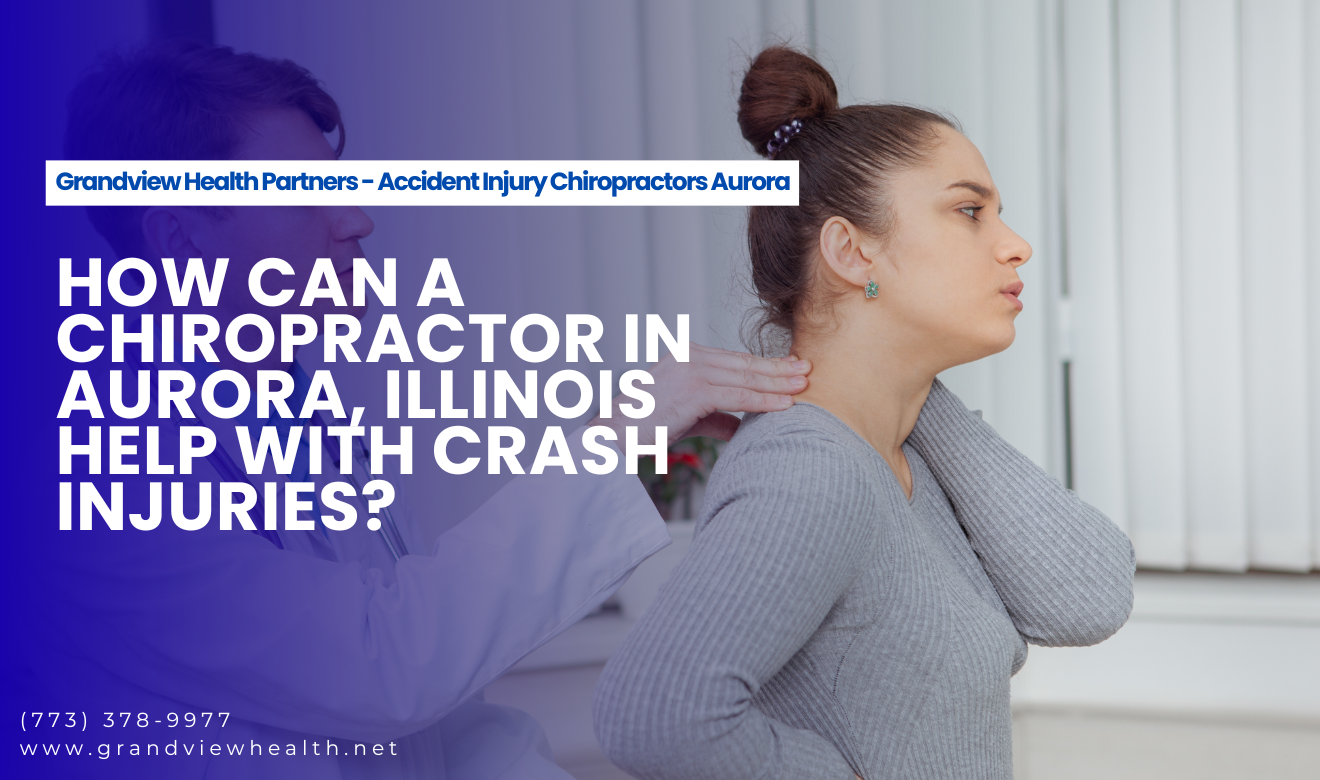
A chiropractor in Aurora for crash injuries can help reduce pain, restore movement, and support your recovery after a car accident. For example, if you have whiplash and can’t comfortably turn your head, chiropractic care may address neck joint stiffness and muscle tension. If your lower back hurts when you sit or stand, treatment may focus on improving spinal mobility and easing inflammation. And if you’re dealing with headaches, shoulder tightness, or tingling down an arm after the crash, a chiropractor can evaluate what’s driving those symptoms and create a plan to help you heal.
Why seeing a chiropractor after a crash matters (even if symptoms seem “minor”)
After a collision, your body often goes into “survival mode.” Adrenaline can mask pain for hours—or even days—while underlying soft-tissue irritation and joint restrictions continue to build. That’s why many people start searching for a chiropractor in Aurora for crash injuries once stiffness, headaches, or back pain suddenly shows up a few mornings later.
A chiropractor in Aurora for crash injuries focuses on the mechanical and neurological factors that can drive post-accident pain, including:
- Joint restriction (commonly in the neck, mid-back, low back, ribs, shoulders, and pelvis)
- Muscle guarding that limits motion and increases pain sensitivity
- Inflammation that can amplify soreness and reduce function
- Nerve irritation that may cause tingling, numbness, or radiating pain
When you work with a chiropractor in Aurora for crash injuries, care is typically aimed at restoring comfortable motion, reducing pain drivers, and helping you return to daily activity with fewer setbacks.
Common car accident injuries a chiropractor evaluates
Not every crash injury looks dramatic, but many are disruptive. A chiropractor in Aurora for crash injuries commonly evaluates symptoms like:
Whiplash and neck sprain/strain
Whiplash isn’t just “neck soreness.” It can involve joint irritation, strained muscles/ligaments, and altered movement patterns. Signs often include:
- Neck stiffness or reduced ability to rotate
- Headaches (especially starting at the base of the skull)
- Shoulder tightness, upper back pain, or jaw tension
- Dizziness or a “heavy head” feeling
If you’re searching for a chiropractor in Aurora for crash injuries because turning your head is painful, a focused exam can help pinpoint whether your symptoms are joint-driven, muscle-driven, or nerve-related.
Low back pain, pelvic irritation, and hip pain
Seatbelts and bracing can strain the lumbar spine and pelvis. Many people notice pain when:
- Sitting or standing for longer periods
- Bending forward or getting in/out of a car
- Sleeping, rolling over, or waking up stiff
A chiropractor in Aurora for crash injuries may assess lumbar joint mobility, SI joint involvement, hip mobility, and whether inflammation is limiting normal movement.
Radiating pain, tingling, or numbness
Symptoms traveling into an arm or leg can suggest nerve irritation. A chiropractor may perform orthopedic and neurological tests to determine whether symptoms match patterns such as cervical or lumbar radiculopathy.
If severe, worsening, or paired with weakness, a chiropractor in Aurora for crash injuries should coordinate timely imaging or referral as appropriate.
Shoulder, arm, and rib pain after impact
Even without a fracture, the shoulder girdle and ribs can become restricted or inflamed after sudden force. If reaching overhead or lifting is painful, evaluation may include joint motion, rotator cuff stress tests, and rib mobility checks.
What to expect at your first visit with a chiropractor in Aurora for crash injuries
Most people want to know: “What will happen at my appointment?” While every case is different, a chiropractor in Aurora for crash injuries typically starts with a structured process designed to be both safe and specific.
Step-by-step: typical crash injury assessment
- History of the crash and your symptoms (when pain started, what makes it worse/better, daily limitations)
- Range-of-motion testing (neck, back, shoulder, hip—based on your complaint)
- Orthopedic and neurological screening (reflexes, sensation, strength, nerve tension tests)
- Palpation to identify tender tissue, spasm, and joint restriction
- Red-flag screening to determine if imaging or medical referral is needed
This is where a chiropractor in Aurora for crash injuries can also document functional limitations—important when you’re dealing with insurance claims or personal injury considerations.
How chiropractic care may help after a car accident
Chiropractic care is often used to address joint dysfunction, muscle tightness, and movement compensation patterns after trauma. A chiropractor in Aurora for crash injuries may recommend a plan that includes multiple tools, depending on your exam findings and tolerance.
Common treatment approaches (based on exam findings)
- Chiropractic adjustments to restore joint mechanics and reduce protective guarding
- Joint mobilization (gentler, controlled motion when high-velocity techniques aren’t ideal early on)
- Soft-tissue techniques to address muscle tension and trigger points
- Rehab-style stretching and home exercises to rebuild stability and prevent flare-ups
- Ice/heat guidance to manage inflammation and soreness safely
If you’re unsure whether you need treatment or just time, a chiropractor in Aurora for crash injuries can help you differentiate “normal soreness” from patterns that commonly persist without targeted care.
How long does it take to feel better after a crash?
Recovery time varies widely. Factors include the severity of the impact, your health history, your stress level, sleep quality, and how soon care begins. Some people improve within a few visits; others require structured care over several weeks.
General recovery variables that affect timelines
- Time to first evaluation (early assessment can reduce the chance of compensation patterns becoming entrenched)
- Presence of radiating symptoms (tingling/numbness may take longer to calm)
- History of prior neck/back injuries (old injuries can flare or complicate recovery)
- Consistency with home care (mobility work, posture, sleep positioning)
A chiropractor in Aurora for crash injuries can re-test motion and symptom triggers over time so the plan isn’t guesswork—it’s guided by measurable changes.
Signs you should be evaluated sooner rather than later
Some post-crash symptoms should not be ignored. Consider scheduling promptly with a chiropractor in Aurora for crash injuries if you notice:
- Headaches that are new or increasing in frequency
- Neck pain with difficulty rotating or looking up/down
- Back pain that worsens with sitting, driving, or standing
- Tingling, numbness, or burning into an arm/hand or leg/foot
- Sleep disruption due to pain
- “Pins and needles” when you raise your arm or turn your head
Important: Seek immediate medical attention for chest pain, shortness of breath, sudden severe headache, fainting, loss of coordination, progressive weakness, or bowel/bladder changes.
A practical care plan: what a week-by-week approach may look like
People often wonder how treatment is structured. While every plan is individualized, here’s a clear example of how a chiropractor in Aurora for crash injuries may progress care.
| Phase | Primary goals | Typical focus |
|---|---|---|
| Early (days 1–14) | Reduce pain, protect irritated tissue, regain basic motion | Gentle mobility work, inflammation strategies, careful manual therapy, activity modifications |
| Rehab (weeks 2–6) | Improve stability, reduce flare-ups, normalize movement patterns | Progressive stretching, targeted strengthening, postural coaching, continued joint care |
| Return to activity (weeks 6+ as needed) | Build resilience for work, exercise, and driving | Higher-level conditioning, functional movement training, strategies to prevent recurrence |
| Re-evaluation checkpoints | Confirm measurable progress | Re-testing range of motion, symptom triggers, strength, and daily function scores |
This “phased” model helps a chiropractor in Aurora for crash injuries avoid doing too much too soon, while still making steady progress toward normal function.
Evidence and credibility: what research suggests about manual care for crash-related neck pain
Clinical guidelines and research reviews commonly support a combination of manual therapy, exercise, and education for many types of mechanical neck pain—including whiplash-associated disorders—especially when care emphasizes active recovery and graded return to movement.
For example, guidance summarized in resources from organizations such as the American Physical Therapy Association (APTA) and peer-reviewed clinical practice guidelines frequently emphasizes:
- Staying active within tolerance
- Manual therapy when appropriate
- Exercise to restore function and reduce recurrence risk
- Patient education for self-management
A chiropractor in Aurora for crash injuries who integrates movement-based rehab alongside hands-on care aligns well with these evidence-informed principles.
Helpful services that may be used alongside chiropractic care
Many crash recovery plans work best when they combine joint care with supportive therapies that address muscle tone and tissue sensitivity. Depending on your exam and stage of healing, a chiropractor in Aurora for crash injuries may recommend options such as:
- Myofascial Release to reduce soft-tissue tension and improve mobility
- Ice/heat strategies to manage inflammation and soreness
- Gentle stretching progressions to restore motion safely
Crash injuries vs. “normal soreness”: how to tell the difference
It’s normal to feel sore after a jolt—but persistent limitations often signal something that benefits from evaluation. Here are patterns a chiropractor in Aurora for crash injuries commonly sees when soreness is more than just temporary.
More likely short-term soreness
- Mild stiffness that improves day by day
- No radiating symptoms
- Sleep isn’t significantly disrupted
- Motion is mildly uncomfortable but not sharply limited
More likely needs an evaluation
- Symptoms that worsen after 48–72 hours
- Headaches that persist or intensify
- Sharp pain with turning, lifting, or sitting
- Numbness/tingling or pain traveling into a limb
- Feeling “stuck,” guarded, or unstable
If you relate to the second list, it’s reasonable to book with a chiropractor in Aurora for crash injuries to identify what’s driving the pattern.
Documenting your recovery: why it matters after a car accident
In addition to helping you feel better, proper documentation can be important after a crash. Clear notes help show how the injury affected your daily function and how care is progressing.
A chiropractor in Aurora for crash injuries may document:
- Range-of-motion restrictions
- Orthopedic and neurological test results
- Pain scores and functional limitations (driving, sitting, lifting, sleeping)
- Objective re-test findings over time
If you want a deeper look at how chiropractic care supports injury rehabilitation, you may also find this helpful: how chiropractic care supports personal injury rehabilitation.
Getting Back to Feeling Like Yourself Again
When you’re dealing with pain after a collision, the goal isn’t just “getting adjusted”—it’s getting your mobility, sleep, focus, and confidence back. A chiropractor in Aurora for crash injuries can evaluate the true source of your symptoms, guide you through a structured plan, and track progress with measurable re-checks.
Whether you’re battling whiplash, low back pain, headaches, or tingling down an arm, working with a chiropractor in Aurora for crash injuries can be a practical step toward recovery—especially when care combines hands-on treatment, movement-based rehab, and clear education for what to do at home.
Look for a provider who uses evidence-informed methods, completes a thorough orthopedic and neurological exam, and communicates clearly about findings, expected timelines, and next steps—so you feel supported, safe, and informed throughout the healing process with a chiropractor in Aurora for crash injuries.
Frequently Asked Questions
Don’t “Wait It Out” After a Crash—Get a Clear Plan for What’s Really Going On
If you’re dealing with neck stiffness, headaches, low back pain, or tingling after a collision, an early evaluation can make all the difference. At Grandview Health Partners – Accident Injury Chiropractors Aurora, we’ll assess what’s driving your symptoms, document functional limitations, and build a step-by-step recovery plan focused on restoring motion, reducing pain, and getting you back to daily life with fewer setbacks—starting with a visit that’s thorough, specific, and tailored to your crash injury.


