
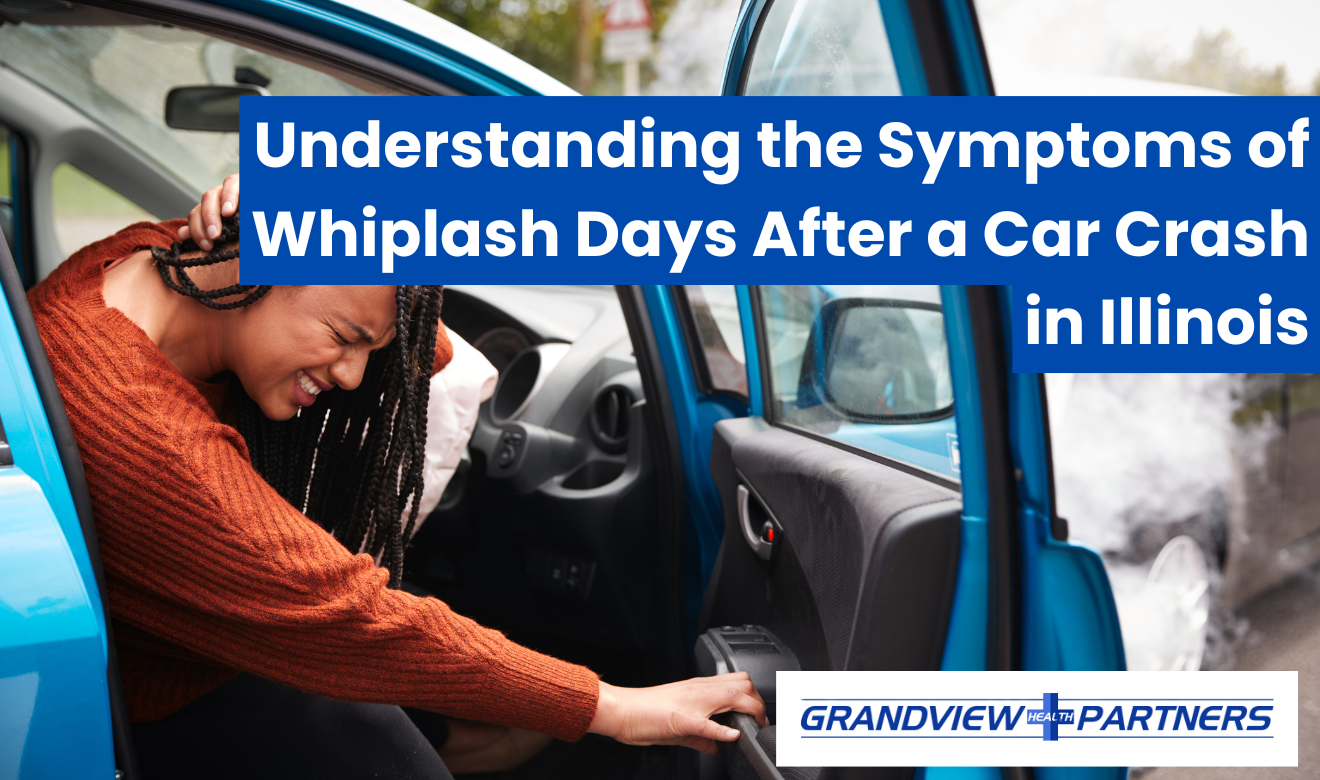
Executive Summary
Whiplash symptoms commonly show up 12–72 hours after a car crash as inflammation and muscle guarding build, so feeling “fine” at the scene does not rule out injury. Track symptoms day-by-day and seek urgent evaluation if neurologic signs (worsening numbness, weakness, balance or vision changes) or severe escalating headache/vomiting appear.
- Delayed onset is normal: Adrenaline can mask pain initially, while swelling, muscle spasm, and nervous system sensitization intensify symptoms over the next few days.
- Symptom clusters matter: Neck stiffness with reduced range of motion, base-of-skull headaches, shoulder/upper-back pain, and possible tingling/dizziness often appear together and should be documented with triggers and functional limits.
- Red flags change the plan: Progressive numbness, new weakness, worsening balance/confusion, or severe rapidly intensifying headache (especially with vomiting) requires urgent assessment to rule out concussion or significant nerve/spinal involvement.
Whiplash is a neck soft-tissue injury caused by rapid back-and-forth motion during a crash. The symptoms of whiplash days after a car crash often start 12 to 72 hours later, not at the scene. In Illinois rear-end collisions on I-90, I-294, or Lake Shore Drive, the head can snap even at low speeds during stop-and-go traffic. Common delayed signs include neck stiffness, reduced range of motion, headaches that start at the base of the skull, shoulder or upper-back pain, and pain that worsens when turning the head to check mirrors. Some people also notice tingling or numbness into the arm, jaw pain, dizziness, blurred focus, nausea, or new sensitivity to light and noise. Sleep problems, irritability, and trouble concentrating can appear after the adrenaline wears off. Medical notes often document muscle spasm, tenderness over the cervical paraspinals, and pain with flexion and rotation. If symptoms escalate, weakness develops, or numbness spreads, urgent evaluation is needed because these signs can overlap with concussion or cervical nerve involvement.
Why Whiplash Symptoms Often Show Up Later (Not at the Crash Scene)
Delayed onset is common because inflammation, muscle guarding, and nervous system sensitization build over hours to days after a rapid neck acceleration-deceleration event. This timeline is well recognized in clinical practice and is one reason people feel “fine” right after a rear-end collision and then worsen later.
Immediately after impact, adrenaline can temporarily blunt pain perception. Over the next 12–72 hours, tissues in the cervical spine region (muscles, ligaments, facet joints, and surrounding nerves) may become irritated and swollen. As that reaction progresses, patients often notice:
- Increasing stiffness and protective muscle spasm
- Headaches that become more frequent or more intense
- Pain with routine movements (turning to back up, checking mirrors, looking down at a phone)
- Sleep disruption as neck discomfort rises at night
Common Delayed Symptoms You Should Track Day-by-Day
Most post-collision neck injuries follow a predictable symptom pattern that changes over the first week. Tracking symptoms helps clinicians determine whether the presentation is uncomplicated soft-tissue strain or whether further evaluation is needed.
People frequently report a cluster of symptoms rather than a single complaint. The following are the most documented delayed signs after a motor vehicle crash:
Neck pain and stiffness
Neck stiffness with reduced range of motion is one of the most consistent findings after whiplash-type mechanisms. Pain often increases with rotation (turning the head) and with flexion (looking down).
- “Tight band” feeling along the sides of the neck
- Pain when holding the head in one position (computer/phone use)
- Spasm and tenderness of cervical paraspinal muscles
Headaches starting at the base of the skull
Cervicogenic headache patterns commonly arise when the upper cervical joints and surrounding muscles become irritated. These headaches often start in the suboccipital region and may wrap toward the temples.
- Headache triggered by neck movement or sustained posture
- Pressure or aching behind the eyes with neck tension
- Headache paired with upper trapezius tightness
Shoulder and upper-back pain
Upper trapezius, levator scapulae, and rhomboid overload can develop as the body guards the neck. This is why discomfort is often felt between the shoulder blades or at the top of the shoulders.
- Soreness when lifting the arm or reaching overhead
- Increased pain carrying bags or briefcases
- “Burning” tightness across the upper back
Tingling, numbness, or radiating arm symptoms
Radiating symptoms can occur when cervical nerve roots or peripheral nerves become irritated, or when muscle spasm increases mechanical tension on nearby nerves. Any progression in numbness, weakness, or coordination changes warrants prompt medical evaluation.
- Pins-and-needles into the forearm or fingers
- Grip weakness or dropping objects
- Symptoms that worsen with neck extension or rotation
Dizziness, visual focus changes, and nausea
Balance and focus complaints can follow neck injury and may also overlap with concussion symptoms. Because overlapping conditions require different management, these symptoms should be documented and assessed early.
- Lightheadedness when standing or turning quickly
- Blurred focus when reading or using screens
- Nausea that increases with motion
Jaw pain and sound/light sensitivity
Jaw discomfort can occur due to clenching during impact or cervical muscle referral patterns. Increased sensitivity to light/noise can appear when headaches or concussion-type features are present.
- Jaw soreness with chewing or yawning
- New sensitivity to bright lights or loud environments
- Ear fullness or ringing (needs evaluation if persistent)
Sleep disturbance, irritability, and concentration issues
Sleep disruption and cognitive complaints may emerge after pain increases or when the nervous system remains “on alert” post-crash. Persistent cognitive symptoms should be evaluated for concussion or other contributing factors.
- Trouble finding a comfortable sleep position
- New fatigue, irritability, or anxiety
- Difficulty concentrating at work or while driving
Red Flags That Require Urgent Medical Evaluation
Certain symptoms after a crash are not typical soreness and should be treated as urgent until proven otherwise. These signs may indicate concussion, spinal cord involvement, fracture risk, or significant nerve compromise.
Seek urgent evaluation (ER/urgent care) if any of the following occur:
- New or worsening weakness in an arm or leg
- Numbness spreading, especially with loss of hand function or balance problems
- Severe headache that is rapidly intensifying, especially with vomiting
- Confusion, repeated dizziness, fainting, or worsening visual changes
- Loss of bowel or bladder control
- Neck pain with fever or unexplained rash (medical rule-out needed)
If you may have sustained a head injury, do not “wait it out.” Overlapping symptoms can occur, and timely assessment helps guide safe activity levels and follow-up.
How Clinicians Evaluate Delayed Whiplash After a Collision
A proper evaluation combines a detailed history with a structured physical exam focused on range of motion, neurologic status, and tissue tenderness. The goal is to rule out serious conditions, document functional limitations, and establish an evidence-based care plan.
Common components of a post-crash assessment include:
- History: crash mechanism (rear-end/side impact), head position, seatbelt use, headrest position, immediate symptoms vs delayed onset
- Range of motion testing: flexion, extension, rotation, side-bending, and pain reproduction patterns
- Palpation: cervical paraspinal spasm, upper trapezius/levator scapula tightness, tenderness around facet regions
- Neurologic screening: reflexes, sensation, strength, grip comparison, coordination
- Functional tests: symptom provocation with posture, driving-like head turns, reaching and lifting
Imaging decisions depend on clinical findings. Many soft-tissue injuries do not show on X-ray, but imaging may be considered when red flags, significant neurologic deficits, or concerning exam findings are present.
Documentation and Illinois Crash Follow-Through That Helps Protect Care Continuity
After a vehicle collision in Illinois, consistent documentation supports continuity of care and helps avoid gaps between symptoms, diagnosis, and treatment. Accurate records also matter if an insurance claim or a personal injury case develops.
Practical steps that are commonly recommended after delayed symptom onset:
- Write down symptom timing (when stiffness started, when headaches began, what movements aggravate pain).
- Save crash-related records (photos, tow/repair paperwork, discharge papers, prescriptions).
- Track functional limitations (driving tolerance, screen tolerance, sleep quality, missed work).
- Keep a list of providers and visit dates so your care story is consistent across clinics.
If symptoms lead to a claim, the term personal injury generally refers to harm suffered by a person’s body or mind and is often associated with documentation requirements. Regardless of fault questions, clinical consistency (history, exam findings, and objective functional limits) is what supports appropriate care planning.
Core Timeline and Symptom Patterns (Structured for Quick Comparison)
This table summarizes common post-crash time windows, what patients often feel, and what local follow-through typically looks like in Illinois. It is designed to help you recognize patterns and communicate clearly during appointments.
| Feature / Metric | Specifications | Local Guidelines |
|---|---|---|
| Typical onset window | Many symptoms begin 12–72 hours after the crash; stiffness and headaches often increase over the first week. | If new neurologic deficits or severe headache/vomiting occurs, seek urgent evaluation rather than waiting for a routine visit. |
| Most reported symptom clusters | Neck pain/stiffness, reduced ROM, cervicogenic headaches, shoulder/upper-back pain, dizziness, radiating arm symptoms. | Bring a symptom log to appointments; include driving tolerance and work limitations to support functional assessment. |
| Objective exam findings often documented | Muscle spasm, cervical paraspinal tenderness, pain with flexion/rotation, guarded posture, positive neural tension signs in some cases. | Request clear chart notes and a home program; consistent documentation helps care coordination across providers. |
| When to consider advanced work-up | Progressive numbness/weakness, balance problems, worsening cognitive symptoms, severe escalating pain, or symptoms not matching a simple strain. | Illinois patients commonly use urgent care/ER for red flags and follow with outpatient rehabilitation once serious conditions are ruled out. |
What Helps in the First 7–14 Days: Practical, Clinically-Common Strategies
Early care focuses on reducing pain, restoring safe motion, and preventing prolonged guarding. The most reliable approach is graded activity—staying gently active while avoiding symptom spikes—paired with clinician-guided manual care and targeted exercises when appropriate.
Common first-phase strategies include:
- Relative rest (not bed rest): avoid prolonged immobilization; change positions often.
- Gentle range-of-motion work: short, frequent movement sessions typically outperform long, aggressive stretching.
- Heat/ice selection: ice often helps with acute soreness; heat can help with muscle spasm—many patients alternate based on symptom response.
- Ergonomic protection: raise screens to eye level, avoid cradling the phone, use a supportive pillow position.
- Driving modifications: adjust mirrors to reduce excessive head turning; take breaks on longer drives.
For patients with ongoing neck dysfunction after a collision, Neck Pain Treatment is commonly used to address restricted motion, muscle spasm, and related upper-back complaints through a structured plan of care.
Rehabilitation Options: What a Plan of Care Commonly Includes
Effective rehab is multi-modal: manual techniques, progressive exercise, and symptom-calming therapies are combined and adjusted based on objective changes in motion, function, and neurologic tolerance. A plan should be measurable, not generic, and should change as you regain capacity.
Depending on exam findings, care plans commonly include:
- Manual therapy: soft-tissue work and joint mobilization to improve segmental motion and reduce guarding.
- Targeted exercise: deep neck flexor endurance, scapular stability, and thoracic mobility to reduce recurring strain.
- Postural retraining: reducing forward-head posture that amplifies cervical loading.
- Symptom-modulating modalities: heat/ice protocols or electrical stimulation when clinically appropriate.
- Return-to-activity progression: a staged plan for work tasks, gym activities, and longer driving exposure.
If the crash led to broader musculoskeletal issues beyond the neck—such as mid-back pain, shoulder strain, or flare-ups with sitting—many patients benefit from understanding how rehab is structured across the full recovery timeline as described in how chiropractic care supports personal injury rehabilitation.
How to Communicate Symptoms So You Get the Right Work-Up
Clear symptom reporting improves triage decisions, including whether the focus should be soft tissue care, neurologic evaluation, or concussion screening. Specific details are more useful than pain scores alone.
Use this checklist before your appointment:
- Location: midline neck vs one-sided, base-of-skull vs temple headaches, shoulder blade vs shoulder joint pain.
- Pattern: constant vs intermittent; morning stiffness vs end-of-day worsening.
- Triggers: turning left/right, braking, checking blind spots, lifting, screen time.
- Neurologic features: tingling distribution (thumb vs pinky side), weakness, clumsiness, balance changes.
- System symptoms: nausea, visual focus issues, sensitivity to light/noise, sleep interruption.
Getting Back to Normal Safely: What “Improvement” Should Look Like
Recovery should show measurable gains: more comfortable motion, longer tolerance for work and driving, fewer headaches, and decreasing reliance on symptom avoidance. If you are not seeing objective progress, reassessment is appropriate.
Positive recovery indicators typically include:
- Neck rotation improves enough to check mirrors without sharp pain
- Headache frequency and intensity trend downward week-to-week
- Less morning stiffness and fewer nighttime wake-ups
- Reduced radiating symptoms and improved grip endurance
- Improved tolerance for sitting, computer work, and commuting
Reasons to request reassessment or referral include:
- Symptoms plateau with no functional improvement
- Radiating pain, numbness, or weakness progresses
- Dizziness, cognitive symptoms, or visual issues persist
- Pain becomes more widespread or unusually sensitive to light touch
Key Takeaways for Delayed Whiplash Symptoms After a Crash
Delayed neck pain after a collision is common and often peaks after the first day or two as inflammation and muscle guarding develop. The safest approach is to track symptoms carefully, recognize red flags early, and follow a structured evaluation and rehabilitation plan that restores motion and function.
To stay protected medically and functionally after a rear-end collision:
- Monitor symptoms for the first week, especially headaches, stiffness, and any radiating arm symptoms.
- Seek urgent care for neurologic deficits, escalating severe headache, vomiting, confusion, or worsening balance.
- Bring a written symptom timeline to your appointment so your exam and documentation match what you’re experiencing.
- Prioritize measurable progress—range of motion, driving tolerance, sleep, and work capacity—not just temporary pain relief.
Frequently Asked Questions
Don’t “Wait It Out” and Hope It Goes Away—Get Your Neck Checked Before Small Symptoms Become a Big Problem
Delayed whiplash symptoms can feel deceptively mild at first—until the stiffness locks in, headaches ramp up, driving gets harder, sleep falls apart, and tingling or weakness starts to show up. The real risk isn’t just discomfort; it’s letting inflammation, muscle guarding, and nerve irritation snowball into a longer recovery, missed work, and avoidable loss of function.
Trying to handle this on your own with random stretches, heat/ice guesswork, and “toughing it out” can backfire—especially if you’re unknowingly dealing with concussion overlap, cervical nerve involvement, or a pattern that needs a different plan than a simple strain. Without a structured exam and clear documentation, it’s also easy for your medical timeline to become inconsistent across providers, creating gaps that can complicate follow-through, referrals, and insurance-related paperwork.
You don’t need to panic—but you do need a plan. Get evaluated, track your symptoms, rule out red flags, and start a measured recovery approach that restores safe range of motion and keeps you moving forward instead of stuck managing setbacks.


