
 That sharp, electric pain shooting from your lower back down into your leg isn’t something you should have to live with. If sitting through your commute on I-88, standing on a warehouse line, or even getting out of bed has become a daily battle, you may be dealing with sciatica. At Grandview Health Partners, our sciatica treatment for Aurora, IL patients focuses on finding and addressing the root cause of the nerve irritation — not just quieting the symptoms with another round of pills.
We’re an accident-injury and chiropractic practice serving patients across the Chicago area and the western suburbs, and sciatica is one of the most common complaints we see. The good news: for many people, this is a highly treatable condition with conservative, drug-free care.
Why Sciatica Treatment Matters
Sciatica isn’t a diagnosis on its own — it’s a set of symptoms caused by irritation or compression of the sciatic nerve, the largest nerve in your body. It runs from your lower spine through your hips and down each leg. When something presses on it, the pain rarely stays in one place.
Left unaddressed, sciatica tends to get more disruptive, not less. What starts as occasional tingling can progress to constant burning pain, weakness, and trouble standing or walking. Many Aurora-area patients tell us they pushed through it for weeks or months, assuming it would pass on its own — and ended up changing how they sleep, work, and move just to cope.
Acting sooner generally gives you more options and a smoother recovery. Conservative care like chiropractic is widely recommended as a first-line approach before considering more invasive steps. And in rare cases, sciatica can signal something that needs urgent medical attention — which is exactly why a proper evaluation matters. If you ever experience loss of bladder or bowel control or sudden, severe leg weakness, seek emergency care right away rather than waiting for an appointment.
Common Problems Our Sciatica Care Helps Solve
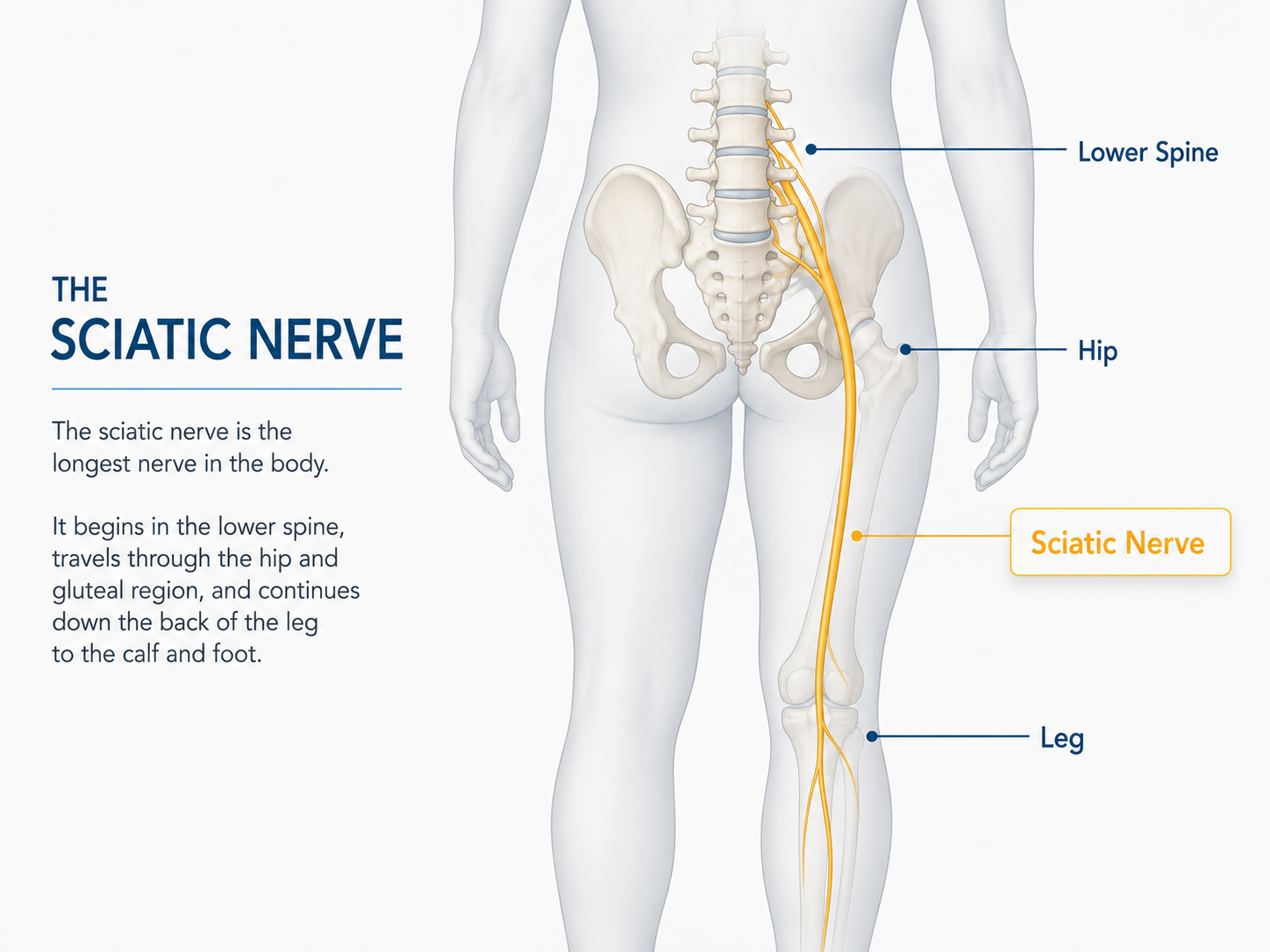 Sciatica shows up differently from person to person. You don’t need every symptom on this list to benefit from an evaluation. Patients commonly come to us with:
- Radiating leg pain — a burning, shooting, or electric sensation that travels from the low back or buttock down the back of one leg.
- Numbness and tingling — “pins and needles” in the leg, calf, or foot that won’t settle.
- Pain that worsens when sitting — a frustrating problem for commuters and anyone with a desk job.
- Lower back pain that flares alongside the leg symptoms. (Our team also handles broader upper and lower back pain that often overlaps with sciatica.)
- Weakness in the leg or foot that makes stairs, lifting, or long walks feel unstable.
- Symptoms after an injury — a slip on icy Aurora pavement, a lifting strain at work, or a car accident.
The underlying cause is usually one of a handful of things: a herniated or bulging disc pressing on the nerve, spinal stenosis (narrowing of the spinal canal), piriformis muscle tightness, or degenerative changes in the lower spine. A herniated disc is one of the most frequent triggers, and identifying which mechanism is driving your pain is the whole point of your first visit. If you want a deeper primer on the condition before you come in, our overview of sciatica causes, symptoms, and treatment options is a useful starting point.
Our Sciatica Treatment Process
We don’t believe in a one-size-fits-all adjustment. Here’s how care typically works for our Aurora-area patients:
Step 1 — Thorough evaluation. We start by listening to your history and symptoms, then perform orthopedic and neurological testing to pinpoint where and why the sciatic nerve is being irritated. If imaging is needed, we’ll discuss it.
Step 2 — A clear, personalized plan. Based on your exam, we map out a treatment approach and explain it in plain language — what we found, what we recommend, and roughly how long we’d expect care to take.
Step 3 — Targeted treatment. Depending on your situation, care may include precise chiropractic adjustments to restore spinal motion, mechanical traction to gently decompress the spine and take pressure off the nerve, and supportive therapies like electrical muscle stimulation to calm muscle spasm and discomfort.
Step 4 — Active recovery and prevention. As your symptoms ease, we add stretches and movements you can do at home so the relief holds — and so you’re less likely to flare up again. For a fuller picture of what conservative care looks like, see how chiropractic care addresses sciatica.
Throughout, we re-check your progress and adjust the plan. The goal is steady, measurable improvement — not endless visits.
Why Choose Grandview Health Partners
Sciatica is one of the most common conditions we treat, and we approach it as a focused clinical problem rather than a generic backache. A few things set our care apart for patients in and around Aurora:
- Conservative, drug-free first. We aim to resolve the nerve irritation through hands-on care and movement before anything more invasive is on the table.
- Injury-experienced. Because we’re an accident-injury practice, we’re comfortable with sciatica stemming from auto accident injuries and workers’ compensation injuries — and the documentation those cases often require.
- Whole-picture care. Sciatica rarely travels alone. We assess the surrounding muscles, posture, and movement patterns so we’re treating the cause, not chasing the symptom.
- Clear communication. You’ll always understand what we found and why we’re recommending a given step.
We won’t promise a miracle cure — no honest provider can. What we can promise is a careful evaluation, an evidence-informed plan, and a straightforward conversation about what to realistically expect.
Serving Aurora, IL and the Fox Valley
Aurora is a city of commuters, manufacturers, and active families — and that lifestyle has a way of feeding into sciatica. Long sits on the BNSF Metra line or in tollway traffic on I-88 keep the lower back loaded for hours. Warehouse, logistics, and manufacturing work around the Fox Valley puts repeated strain on the spine through lifting and twisting. And Illinois winters add their own risk: a single hard fall on icy pavement can aggravate or trigger nerve pain that lingers for months.
We see patients from across the area, including those traveling from North Aurora, Montgomery, Oswego, Naperville, Batavia, and Sugar Grove. Wherever you’re coming from, the approach is the same — figure out what’s irritating the sciatic nerve and build a plan to settle it down. If your symptoms started after a crash on a route like the Reagan Memorial Tollway or a work injury, we can also speak to how chiropractic care supports back-pain recovery in those situations.
Cost, Timeline, and What to Expect
Two of the most common questions we hear are “how much will this cost?” and “how long until I feel better?” Honest answers depend on your specific situation, but here’s how to think about both.
Cost depends largely on your insurance coverage and the kind of care you need. Many plans cover chiropractic care, and we’ll help you understand your benefits before treatment begins. If your sciatica is tied to a car accident or a workplace injury, the path is often different — these cases may be handled through auto-accident or workers’ compensation coverage rather than out of pocket, and we have experience working within those processes. We’ll be transparent about costs up front so there are no surprises.
Timeline varies based on what’s causing your sciatica, how long you’ve had it, your age and overall health, and how consistently you follow your home-care plan. Some patients notice meaningful relief within a few visits; others with longstanding or disc-related sciatica need a more gradual course of care. At your first appointment, we’ll give you a realistic estimate rather than a one-size-fits-all promise — and we’ll keep checking that you’re actually making progress.
Get Relief From Sciatica — Book Your Aurora Evaluation Today
You don’t have to keep rearranging your life around sciatic nerve pain. The sooner you address the cause, the sooner you can get back to commuting, working, and moving without that shooting pain down your leg. At Grandview Health Partners, we’ll evaluate what’s driving your sciatica and build a clear, drug-free plan to help you recover.
Call us now at (773) 692-5885 to schedule your sciatica evaluation, or reach out at info@grandviewhealth.net. Same-week appointments are often available for Aurora-area patients. Take the first step toward lasting relief today.
Frequently Asked Questions
What is the best treatment for sciatica in Aurora, IL?
What is the best treatment for sciatica in Aurora, IL?
For most people, conservative care is the recommended first step before considering injections or surgery. That typically means chiropractic adjustments, spinal decompression or traction, targeted stretches, and therapies to calm nerve irritation and muscle spasm. The “best” option depends on what’s compressing your sciatic nerve — a disc issue, stenosis, or muscle tightness all respond differently. A proper evaluation identifies the cause so your treatment actually addresses it instead of just masking the pain temporarily.
How long does it take for chiropractic care to relieve sciatica?
How long does it take for chiropractic care to relieve sciatica?
It varies. Some patients feel noticeable relief within the first few visits, while sciatica that’s been building for months or stems from a herniated disc usually needs a longer, steadier course of care. Your age, overall health, the underlying cause, and how consistently you do your at-home exercises all affect the timeline. At your first appointment we’ll give you a realistic estimate based on your exam findings rather than a generic promise, and we’ll track your progress along the way.
Can a chiropractor treat sciatica without surgery or medication?
Can a chiropractor treat sciatica without surgery or medication?
In many cases, yes. Chiropractic care is a conservative, drug-free approach that aims to relieve pressure on the sciatic nerve through adjustments, decompression, and supportive therapies. Most sciatica improves with this kind of care and never requires surgery. That said, no provider can guarantee an outcome, and certain warning signs — like progressive leg weakness or loss of bladder or bowel control — call for urgent medical evaluation. A thorough exam helps determine whether conservative care is appropriate for you.
What causes sciatica?
What causes sciatica?
Sciatica happens when the sciatic nerve gets irritated or compressed. The most common cause is a herniated or bulging disc in the lower spine pressing on the nerve. Other causes include spinal stenosis (narrowing of the spinal canal), degenerative disc changes, and tightness in the piriformis muscle deep in the buttock. Injuries — a fall, a lifting strain, or a car accident — can also trigger it. Pinpointing which cause applies to you is the key to effective treatment.
How do I know if my leg pain is sciatica?
How do I know if my leg pain is sciatica?
Sciatica usually causes pain that radiates from your lower back or buttock down the back of one leg, often described as burning, shooting, or electric. It’s frequently paired with numbness, tingling, or weakness in the leg or foot, and it commonly worsens when sitting. Pain in both legs, or symptoms without any back involvement, may point to something else. Because look-alike conditions exist, a hands-on evaluation with orthopedic and neurological testing is the most reliable way to confirm it.
Do you treat sciatica caused by a car accident?
Do you treat sciatica caused by a car accident?
Yes. As an accident-injury practice, we regularly treat sciatica and related nerve pain that develops after a collision. Crash forces can herniate a disc or inflame tissue around the sciatic nerve, sometimes with symptoms that surface days later. We evaluate the injury, build a treatment plan, and can provide the documentation these cases often require for insurance or legal claims. If your sciatica started after a crash, getting checked promptly helps both your recovery and your records.
Is sciatica treatment covered by insurance or workers’ comp?
Is sciatica treatment covered by insurance or workers’ comp?
Often, yes. Many health insurance plans include chiropractic benefits, and we’ll help you verify your coverage before care begins. If your sciatica is related to a workplace injury, treatment may be handled through workers’ compensation; if it’s from a car accident, it may fall under auto-accident coverage instead. Each path works differently, and we have experience navigating all three. We’ll always be clear about costs and coverage up front so you can make an informed decision.
How much does sciatica treatment cost in Aurora, IL?
How much does sciatica treatment cost in Aurora, IL?
There’s no single price, because cost depends on your coverage and the care your condition requires. Many patients use insurance, while accident- and work-related cases are frequently billed through other channels. The number of visits also matters — mild, recent sciatica generally needs less care than longstanding or disc-related cases. The best way to get an accurate figure is a quick conversation about your situation and benefits, which we’re happy to walk through before you commit to a plan.


