
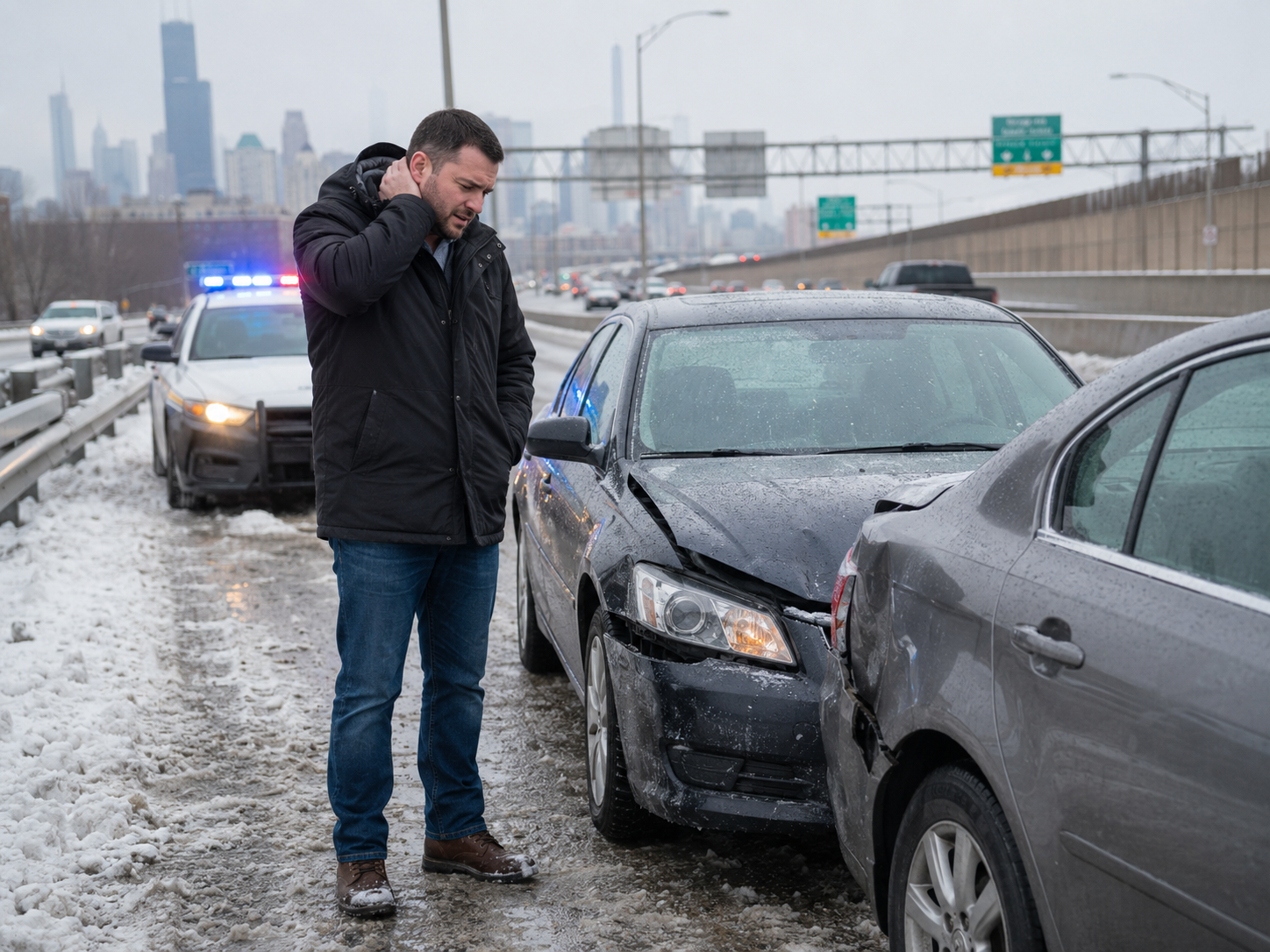
 After a car accident, go to urgent care or the ER first if you have any red-flag symptoms — head injury, severe or spreading pain, numbness, weakness, or trouble breathing — to rule out fractures, concussion, and internal injury. Choose a chiropractor once serious injury has been ruled out, to treat whiplash, soft-tissue damage, and spinal misalignment. For many Chicago accident victims, the smartest path isn’t one or the other — it’s both, in that order. This guide breaks down exactly when each option makes sense so you can protect both your health and any future injury claim.
Understanding Urgent Care After a Car Accident
Urgent care (and the emergency room) is built for one job: rapidly identifying and stabilizing acute injuries. After a collision, an urgent care provider screens for the things that can become life-threatening if missed — concussions and traumatic brain injury, fractures, internal bleeding, organ damage, and spinal cord involvement. They can order X-rays, run basic labs, suture lacerations, immobilize broken bones, and prescribe short-term medication for pain or inflammation.
How it works is straightforward: you’re seen on a walk-in basis, triaged by symptom severity, evaluated by a physician or advanced practitioner, and either treated on-site or referred to the ER for higher-level imaging like a CT scan. Visits are typically fast, and most urgent care centers across Chicago — from the Loop to the neighborhoods — keep extended evening and weekend hours, which matters when a crash happens at rush hour on the Kennedy or Dan Ryan.
Typical costs vary widely. With insurance, an urgent care visit often runs a modest copay; without insurance, expect roughly $150–$300 before imaging, and more if X-rays or procedures are added. In Illinois, if another driver was at fault, these costs are frequently recoverable through the at-fault party’s liability coverage or your own MedPay.
The ideal use case is simple: any time there’s a chance of a serious or hidden injury. If you blacked out, hit your head, feel dizzy, have severe pain, notice numbness or tingling, or simply aren’t sure how badly you’re hurt, urgent care is the right first stop.
Understanding Chiropractic Care After a Car Accident
A chiropractor specializes in the musculoskeletal aftermath of a collision — the whiplash, soft-tissue strain, joint restriction, and spinal misalignment that frequently don’t show up on a standard X-ray and often surface days later. Even a low-speed Chicago fender-bender can jolt the cervical spine enough to cause whiplash and lasting neck dysfunction, and chiropractic care is designed to restore alignment, mobility, and function rather than simply mask symptoms.
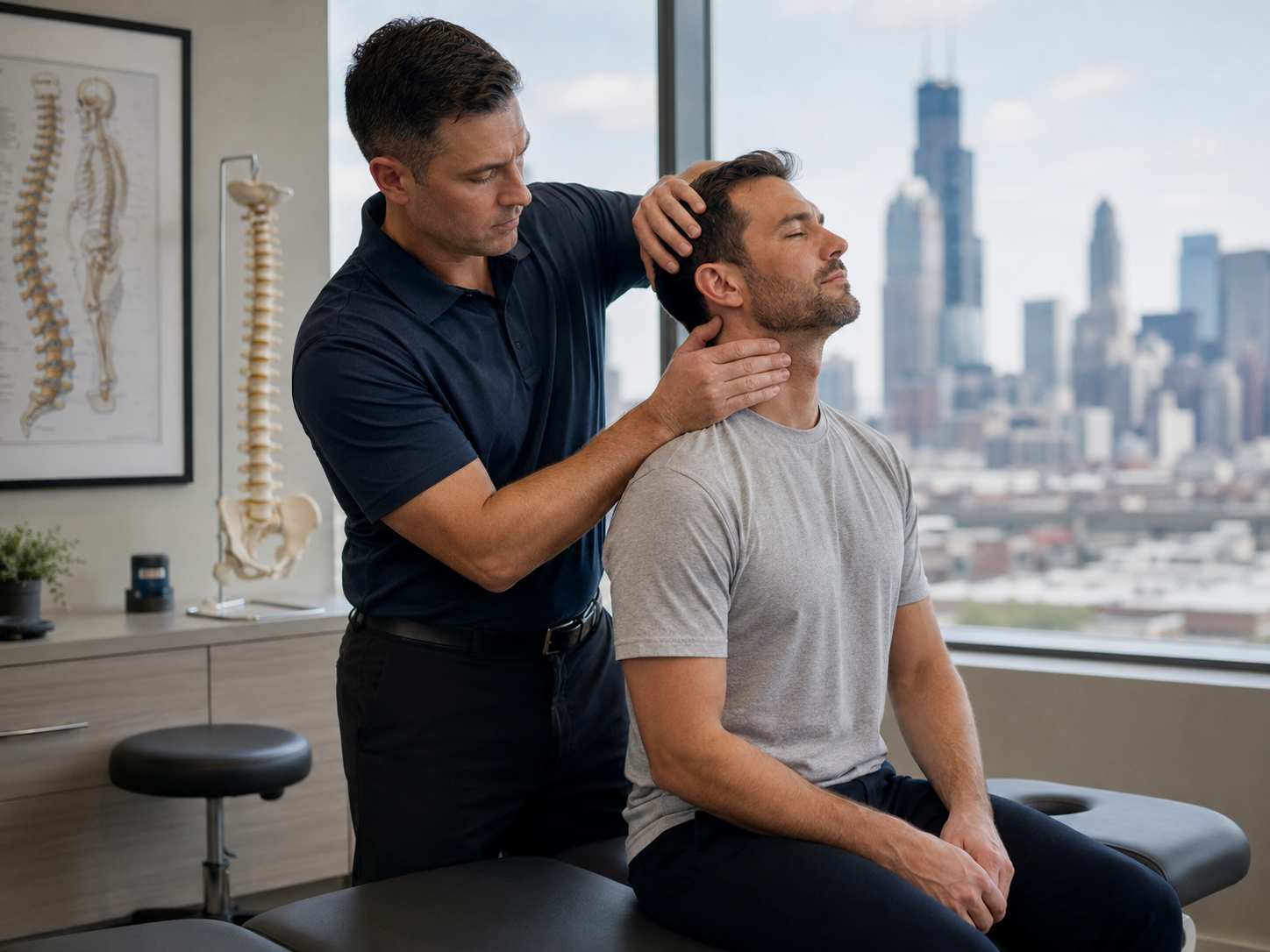 How it works: care begins with a detailed exam and history, sometimes supported by neurodiagnostic testing or imaging review, to map exactly what was injured. From there a chiropractor may use spinal adjustments, mobilization, soft-tissue therapy, hot and cold therapy, and rehabilitative exercise. Care is progressive — a series of visits over weeks, with the plan adjusted as you recover. Results vary from person to person, and a good provider sets realistic expectations rather than promising a fixed outcome.
Typical costs are lower per visit than emergency medicine, often in the $50–$150 range, though accident-related care is commonly billed to auto insurance or handled on a lien in personal-injury cases. The ideal use case is post-acute recovery: once urgent care has ruled out anything dangerous, chiropractic care addresses the lingering neck and back pain, stiffness, headaches, and reduced range of motion that an ER discharge often doesn’t resolve.
Side-by-Side Comparison
| Attribute | Urgent Care / ER | Chiropractor |
|---|---|---|
| Primary purpose | Rule out and stabilize acute, dangerous injury | Treat and rehabilitate musculoskeletal injury |
| Best for | Head trauma, fractures, severe pain, internal injury | Whiplash, soft-tissue strain, spinal misalignment, stiffness |
| Diagnostics offered | X-ray, CT/labs, physician evaluation | Functional/orthopedic exam, neurodiagnostic and imaging review |
| When to go | Immediately after the crash | After serious injury is ruled out; ideally within days |
| Course of care | One visit, plus referrals | Progressive plan over weeks |
| Typical cost | ~$150–$300+; more with imaging | ~$50–$150 per visit |
| Injury-claim documentation | Establishes initial injury record | Documents ongoing treatment and recovery |
Pros and Cons Breakdown
Pros of Urgent Care
- Catches the dangerous stuff: It’s the only option that reliably rules out concussion, fractures, and internal injury after impact.
- Immediate access: Walk-in availability with extended hours across Chicago means you’re seen fast, even late at night.
- Advanced imaging and referrals: X-rays, CT access, and direct lines to specialists when something serious turns up.
- Strong initial record: Creates the first official documentation of your injuries, which matters for any Illinois claim.
Cons of Urgent Care
- Symptom-focused, not recovery-focused: It stabilizes you but rarely resolves whiplash or lingering soft-tissue pain.
- Higher per-visit cost: Visits and imaging add up quickly compared with conservative care.
- Medication-heavy: Relief often relies on prescriptions rather than restoring function.
Pros of Chiropractic Care
- Targets the lingering injuries: Built specifically for the whiplash and spinal issues that surface after a crash.
- Drug-free and conservative: Aims to restore alignment and mobility without reliance on medication.
- Ongoing documentation: A consistent treatment record can support a personal-injury claim.
- Whole-recovery focus: Care plans often fold in pain management and rehab for a fuller recovery.
Cons of Chiropractic Care
- Not for emergencies: A chiropractor cannot rule out internal injury or treat a fracture — that’s why urgent care comes first.
- Requires consistency: Benefits build over a series of visits, not a single appointment.
- Outcomes vary: Recovery depends on injury severity and individual factors, so results aren’t guaranteed.
Which Option Is Better? The Ultimate Showdown
The honest answer to urgent care vs chiropractor after a car accident is that they solve different problems, so the “winner” depends entirely on your symptoms and timeline.
Choose urgent care first if you have any red flags — you hit your head, lost consciousness, feel dizzy or nauseated, have severe or worsening pain, notice numbness, weakness, or tingling, or simply can’t tell how hurt you are. Ruling out a life-threatening or structural injury always takes priority, and no amount of money saved is worth missing a concussion or hairline fracture. In a serious crash, urgent care or the ER isn’t optional.
Choose a chiropractor as your next step if the emergency evaluation comes back clear but you’re left with the classic post-accident pattern: a stiff neck that worsens over a few days, tension headaches, back pain, sciatica-like symptoms, or reduced range of motion. These soft-tissue and alignment injuries are exactly what chiropractic care is designed to rehabilitate, and they’re often what an ER discharge leaves unaddressed.
For most Chicago accident victims, the real winner is a sequence, not a single choice: urgent care to confirm you’re safe, then chiropractic care to actually recover. The two are complementary. If your priority is ruling out serious harm in the first hours, urgent care wins. If your priority is resolving the pain and stiffness that linger for weeks, a chiropractor wins. Smart patients use both.
When This Matters Most in Chicago
Timing and weather make this decision especially relevant in Chicago. Icy winters and slick expressways drive a seasonal spike in low-speed collisions, and those “minor” crashes are precisely the ones where people skip evaluation — then develop whiplash days later. Illinois also has a statute of limitations on injury claims and insurance rules that reward early, well-documented care. Waiting too long to be seen can both slow your recovery and weaken a claim. Whether your accident happened at noon downtown or at 10 p.m. on a side street, getting evaluated promptly protects your health first and your options second.
Conclusion & Recommendation
When weighing urgent care vs chiropractor after a car accident, remember they answer two different questions: “Am I seriously hurt?” and “How do I fully recover?” Lead with urgent care or the ER whenever there’s any chance of a dangerous injury, then transition to chiropractic care for the whiplash, soft-tissue, and spinal issues that medicine alone tends to leave behind. For most people in Chicago, combining both — emergency evaluation up front, conservative rehabilitation afterward — delivers the safest and most complete recovery. The key is not to wait: the sooner you’re seen, the better your outcome.
If you’ve been in a collision and the emergency side is handled, our Chicago team is here for the recovery side. Learn more about our auto accident injury care or read how a car accident affects your spine and how chiropractic care can help. When you’re ready, reach out to schedule a consultation — no pressure, just a clear assessment of where you stand and what recovery could look like.
Frequently Asked Questions
Should I go to urgent care or a chiropractor first after a car accident?
Should I go to urgent care or a chiropractor first after a car accident?
Go to urgent care or the ER first if you have any serious symptoms — head injury, severe pain, numbness, weakness, dizziness, or uncertainty about how hurt you are. Urgent care can rule out fractures, concussion, and internal injury that a chiropractor isn’t equipped to treat. Once you’ve been cleared, a chiropractor is well suited to handle the whiplash and soft-tissue injuries that often linger afterward.
How long after a car accident should I see a chiropractor?
How long after a car accident should I see a chiropractor?
Many providers suggest being evaluated within a few days, even if you feel okay at first. Soft-tissue injuries like whiplash often take 24–72 hours to fully surface, and earlier care may support a smoother recovery. Prompt documentation can also be important if you’re pursuing an injury claim in Illinois.
Can a chiropractor treat whiplash from a car accident?
Can a chiropractor treat whiplash from a car accident?
Yes — whiplash is one of the most common conditions a chiropractor addresses after a collision. Care may include spinal adjustments, mobilization, soft-tissue therapy, and rehabilitative exercises aimed at restoring alignment and range of motion. Outcomes vary by individual and injury severity.
Will my insurance cover chiropractic care after a car accident in Chicago?
Will my insurance cover chiropractic care after a car accident in Chicago?
Often, yes. Accident-related chiropractic care is commonly billed to auto insurance — through the at-fault driver’s liability coverage, your own MedPay, or in personal-injury cases, on a lien. Coverage details vary by policy, so it’s worth confirming the specifics of your plan before starting care.
Do I need to see a doctor before seeing a chiropractor after an accident in Illinois?
Do I need to see a doctor before seeing a chiropractor after an accident in Illinois?
It isn’t legally required, but it’s strongly recommended whenever there’s any chance of a serious injury. A medical evaluation rules out conditions a chiropractor can’t treat, and that initial record establishes the timeline of your injuries — which both protects your health and strengthens any future claim.
What if I don’t feel hurt after my car accident?
What if I don’t feel hurt after my car accident?
Adrenaline can mask pain for hours or even days, so feeling fine immediately afterward doesn’t guarantee you’re uninjured. Whiplash and soft-tissue damage frequently show up later. A prompt evaluation is a low-cost way to catch a hidden injury before it worsens.
Can urgent care and a chiropractor work together?
Can urgent care and a chiropractor work together?
Absolutely. The most effective approach for many accident victims is sequential: urgent care confirms you’re safe and treats any acute injury, then a chiropractor rehabilitates the lingering musculoskeletal damage. The two roles complement each other rather than compete.
Does chiropractic care help with documentation for an injury claim?
Does chiropractic care help with documentation for an injury claim?
It can. Consistent chiropractic treatment creates an ongoing record of your injuries, the care provided, and your progress over time. That documentation often supports a personal-injury claim, though you should consult a qualified attorney for legal advice specific to your situation.


